Quick answer: DV360 is often the better choice when YouTube, Google Marketing Platform integrations, enterprise governance and one workflow for Google plus open-internet media are central to the plan. An independent DSP may fit better when the advertiser prioritizes open-internet identity, retail data, specialized geo-targeting, a different supply path, a simpler self-service model or less dependence on one advertising ecosystem.
There is no universal winner. The right comparison is not DV360 versus one generic category. It is DV360 versus the specific independent DSP that solves your campaign's inventory, data, control and operating requirements.
DV360 vs independent DSPs at a glance
Decision area | DV360 | Independent DSPs | Practical takeaway
|
|---|---|---|---|
YouTube | Native YouTube & partners buying workflow | Not a substitute for DV360's native YouTube buying route | Choose DV360 when YouTube is a core part of the media plan. |
Open-internet inventory | Third-party exchanges, Marketplace packages and publisher deals | Often a central product focus, but supply paths vary by DSP | Compare the publishers and deal paths you actually need, not logo counts. |
Identity and data | Google, first-party and eligible partner data workflows | Options include UID2/EUID, multi-ID frameworks, retail data and addressable household signals | Map the identity method to consent, geography and measurement needs. |
Control | Deep enterprise controls, detailed hierarchy and Google-linked measurement | Ranges from streamlined self-service to sophisticated enterprise platforms | Control depends on the contract, user permissions and service model, not just the platform name. |
Cost model | Commercial terms are typically provided through Google or an authorized partner and are not published as one global rate | Varies by platform, market, spend, support and data; StackAdapt publicly states no minimum spend to get started | Compare total effective cost, not only the platform fee. |
Best fit | Google-integrated, YouTube-heavy and enterprise programmatic teams | Use cases needing open-internet focus, retail data, geo-fencing, multi-ID activation or a different workflow | Start with the media job, then select the DSP. |
Bottom line: DV360 is not automatically better, but it has a clear advantage when YouTube and Google ecosystem integration matter. Independent DSPs win specific decisions when their identity, supply, retail-data, geo-targeting or operating model is a closer fit.
What is the real difference between DV360 and an independent DSP?
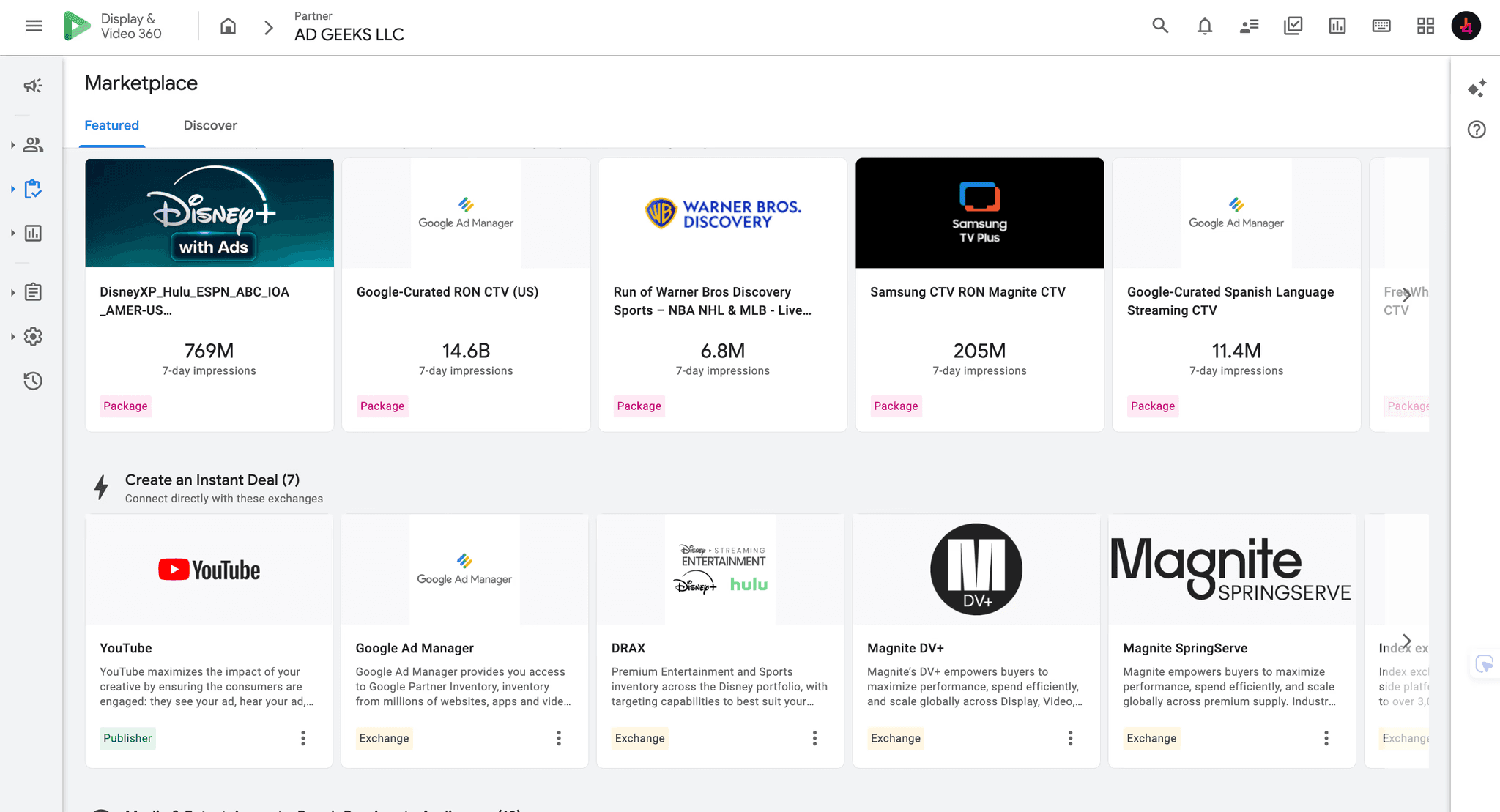
Display & Video 360 is Google's enterprise demand-side platform. Google describes it as an end-to-end campaign management product that connects planning, creative, buying, measurement and optimization. It also integrates with products such as Analytics 360 and provides native YouTube buying alongside third-party exchange inventory.
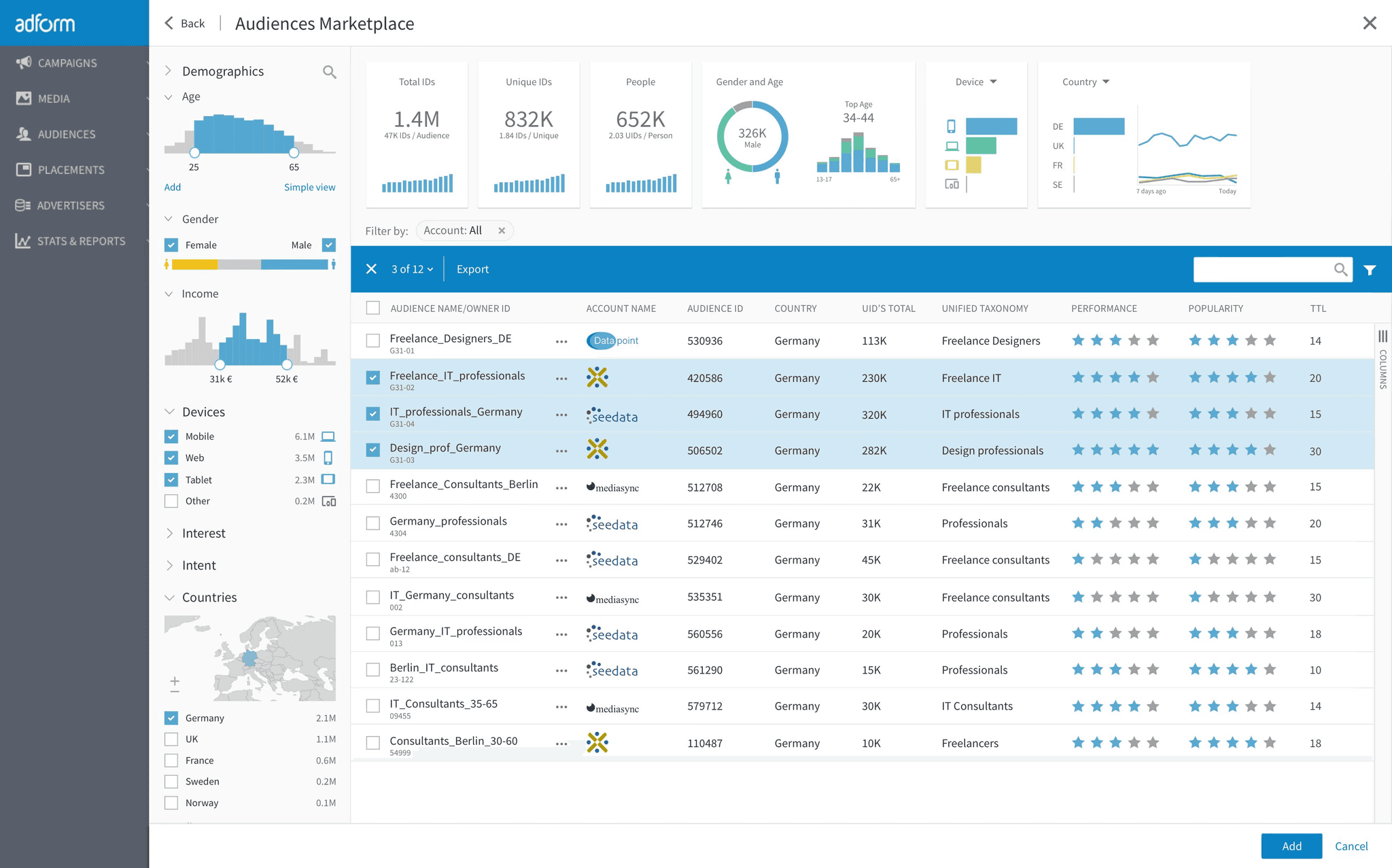
An independent DSP is built around programmatic media buying without owning a consumer advertising ecosystem comparable to Google or Amazon. That description still covers very different products. The Trade Desk centers its positioning on the open internet, identity and retail data. Adform combines omnichannel buying with a multi-ID framework. Simpli.fi specializes in location and addressable activation. StackAdapt emphasizes accessible multi-channel self-service plus optional managed support.
That means an advertiser should never evaluate “independent DSP” as one feature set. Compare the named platforms that are commercially available in your market and compatible with your team.
How do costs compare?
The public websites reviewed for this guide do not provide one directly comparable global fee card for DV360, The Trade Desk, Adform or Simpli.fi. Their commercial terms can depend on market, account structure, partner, media commitment, service level, data usage and measurement. StackAdapt is the exception in this comparison: its current plans page states that no minimum spend is required to get started, while self-service access remains subject to application and approval.
A fair cost comparison should include every layer below.
Cost layer | What to request in writing | Why it matters
|
|---|---|---|
Media | Net media spend and auction or deal price | This is the inventory cost, not the full cost of using the DSP. |
Platform fee | Percentage, fixed fee or blended commercial model | Headline CPMs can hide the technology layer. |
Managed-service fee | Scope, percentage or retainer, and what is included | Trading, reporting and strategy may be separate from platform access. |
Data | Audience CPMs, onboarding and identity fees | Third-party and retail audiences can materially change effective CPM. |
Measurement | Verification, attribution, lift-study and clean-room costs | Measurement is not always included in the media or platform fee. |
Creative | Ad serving, dynamic creative and production charges | Video, CTV and DCO workflows can add separate costs. |
Minimums and commitments | Monthly, annual, campaign or partner-level commitments | A low fee can still be a poor fit if the commitment is too high. |
Ask every provider for an example invoice using the same media budget, channels, data and support scope. That is more useful than asking which DSP is “cheapest.” For a platform-by-platform commercial framework, see DSP Fees and Minimum Spend 2026.
Which platform provides better inventory access?
DV360 has a major native advantage for YouTube. Google states that YouTube inventory is purchased through YouTube & partners line items in DV360. The platform also supports third-party exchanges, Marketplace packages, private deals and Connected TV buying workflows.
Independent DSPs can be stronger for other buying priorities. The Trade Desk emphasizes premium open-internet inventory and publisher relationships. Adform supports display, video, CTV, audio, mobile and DOOH in one workflow. StackAdapt supports CTV, DOOH, display, native, audio, video and email. Simpli.fi combines CTV with household-level and location-led targeting.
The winning inventory question is specific:
Can this DSP access the publishers, exchanges and private deals in the plan?
Is the route direct, curated or reached through another exchange?
What reporting and deal-level controls remain available?
Does the route work in the required countries?
Can the same team manage YouTube, CTV, display, audio and DOOH without creating unnecessary duplication?
Which platform gives advertisers more control?
DV360 offers detailed enterprise structures across partners, advertisers, campaigns, insertion orders, line items, creatives, audiences and deals. That depth supports governance and multi-market consistency, but it also creates a steeper operational learning curve.
Independent DSP control varies. The Trade Desk is also an enterprise platform, with self-service buying, identity and measurement tools. Adform provides an omnichannel workflow with Campaign Planner and Adform IQ. StackAdapt offers self-service, managed and hybrid options across its plan levels. Simpli.fi provides specialized controls for local, addressable and household-led campaigns.
Before signing, confirm who owns and can export:
the advertiser account and campaign history;
audience and conversion configurations;
deal IDs and publisher relationships;
raw or log-level data where available;
reports, naming conventions and creative assets;
admin permissions if the agency or partner changes.
Platform capability does not guarantee contractual control. The agreement and access model decide what the advertiser can actually see, change and retain.
How do identity and first-party data options differ?
DV360's strength is its connection to Google's advertising and measurement environment, plus eligible first-party and partner data workflows. It is a practical fit when Google products already sit at the center of the advertiser's media stack.
The Trade Desk positions UID2, EUID, a cross-device graph, first-party data activation and retail-data partners as core tools for the open internet. Adform's ID Fusion brings 45+ identifiers into one framework and supports unified frequency control across fragmented identity environments. Simpli.fi emphasizes addressable geo-fencing, household targeting, location signals and offline visitation outcomes. StackAdapt combines first-party, contextual and intent-based targeting inside its multi-channel workflow.
Do not select an identity solution by feature count. Confirm consent requirements, match rates, market availability, frequency control, measurement coverage and whether the method works in environments where cookies are absent.
DV360 vs major independent DSPs
Platform | Documented strength | Control and access model | Evaluate first when
|
|---|---|---|---|
DV360 | YouTube, Google integrations, enterprise workflows, CTV and deals | Enterprise hierarchy; access commonly arranged directly or through a partner | YouTube and Google-linked measurement are central |
The Trade Desk | Open-internet buying, UID2/EUID, retail data and premium CTV | Sophisticated self-service platform with enterprise support | Open-internet identity, retail data or independent supply relationships matter |
Adform | Omnichannel buying, multi-ID activation and integrated DOOH planning | Enterprise omnichannel workflow with automation and customization | European markets, multi-ID planning or DOOH are priorities |
StackAdapt | Accessible multi-channel buying across native, display, CTV, audio, video and DOOH | Self-service, managed or hybrid; no published minimum spend to get started | A lean team wants a faster entry point and flexible support model |
Simpli.fi | Addressable geo-fencing, local activation, household CTV and offline attribution | Specialized programmatic workflow; commercial access depends on agreement | Local, franchise, dealership or address-list activation is the core use case |
DV360 vs The Trade Desk
Choose DV360 first when YouTube and Google integrations are non-negotiable. Evaluate The Trade Desk first when the open internet, UID2/EUID, retail-data activation and independent publisher relationships are central. The Trade Desk's 2026 Kokai Zuma release also focuses on a simpler interface, agentic AI and streamlined measurement, although some capabilities remain in open or closed beta.
DV360 vs Adform
DV360 is usually the stronger Google-linked option. Adform deserves evaluation when the plan requires multi-ID activation, European omnichannel buying, audio, CTV and integrated DOOH planning. Its public product page currently states that ID Fusion supports 45+ identifiers.
DV360 vs StackAdapt
DV360 offers deeper Google integration and native YouTube buying. StackAdapt may be easier to enter for a lean or mid-market team because it publicly offers self-service, managed and hybrid support, with no minimum advertising spend required to get started. Approval, region and the practical budget needed for learning still matter.
DV360 vs Simpli.fi
DV360 is the broader enterprise platform. Simpli.fi is the specialist when the campaign begins with street addresses, property boundaries, household CTV, local trade areas or offline visitation. Simpli.fi states that its addressable product converts street addresses into geo-fences and can target mobile, video and CTV devices associated with those locations.
Which DSP is best for Connected TV?
There is no universal CTV winner because each platform connects television inventory to a different advantage.
DV360: YouTube, premium CTV inventory, Marketplace packages and enterprise planning.
The Trade Desk: open-internet premium CTV, identity and retail-data activation.
Adform: CTV inside one omnichannel and multi-ID workflow.
StackAdapt: CTV inside an accessible multi-channel platform.
Simpli.fi: household, ZIP-level and addressable CTV.
Ask for a publisher and deal map by market before deciding. “CTV access” alone does not show whether the platform can reach the exact apps, audiences and supply paths required.
When should an advertiser use more than one DSP?
Use multiple DSPs only when each platform has a distinct job that cannot be handled efficiently in one place. A clear example is DV360 for YouTube plus another DSP for a specialized retail-data, open-internet CTV or addressable geo-fencing use case.
The trade-off is operational cost. Multiple DSPs can create duplicated audiences, fragmented reporting, inconsistent frequency control, more contracts and harder attribution. Define the role of each platform before launch and agree how reach, frequency and conversions will be deduplicated. See the Multi-DSP Matrix for a deeper operating model.
Decision checklist
List the must-have publishers, channels, markets and deal types.
Separate YouTube from broader CTV and open-internet video requirements.
Define which first-party, retail, identity or location data must be activated.
Request the complete fee stack and an example invoice at the same media budget.
Confirm minimums, contract term, payment terms and exit conditions.
Map advertiser, agency and platform permissions before onboarding.
Verify conversion, reach, frequency and sales measurement for each market.
Test reporting exports, deal transparency and supply-path detail.
Estimate the trader time and training required to operate the platform well.
Choose multiple DSPs only when each has a documented, non-overlapping role.
Red flags when comparing DSPs
One fee without the full stack: data, verification, creative and service costs may sit elsewhere.
Inventory claims without a market map: availability can vary by country, publisher, deal and account.
“Full control” without admin access: the advertiser may still depend on a reseller or managed-service team.
Choosing by CPM alone: low CPM does not prove supply quality, incremental reach or business impact.
Using two DSPs for the same job: this can increase duplication without adding useful reach.
Unsupported winner claims: the right DSP depends on the campaign, team and contract.
Final verdict
DV360 is better when the campaign depends on native YouTube buying, Google Marketing Platform integrations, enterprise governance and one environment for Google plus third-party programmatic media. An independent DSP can be better when the plan requires an open-internet-first identity strategy, retail data, specialized geo-fencing, multi-ID activation, integrated DOOH or a more accessible self-service model.
The best platform is the one that provides the required inventory, data and measurement with commercial terms and operating controls the team can actually use. Start with the campaign job. Then compare contracts, supply paths and ownership before choosing the interface.
AdGeeks provides managed and self-service access options across leading DSPs. Review DV360 access and managed service or request a comparison based on your markets, channels and budget.
Frequently asked questions
Is DV360 better than an independent DSP?
Not universally. DV360 is a strong choice for YouTube, Google integrations and enterprise programmatic operations. An independent DSP may fit better for open-internet identity, retail data, location targeting, multi-ID activation or a different service model.
Does DV360 only buy Google inventory?
No. DV360 can buy YouTube and Google-linked inventory, plus third-party exchange inventory, Marketplace packages and publisher deals. The exact supply available depends on account, geography and commercial access.
Which independent DSP is the best alternative to DV360?
It depends on the use case. Evaluate The Trade Desk for open-internet buying, identity and retail data; Adform for omnichannel and multi-ID workflows; StackAdapt for accessible multi-channel self-service; and Simpli.fi for local, household and addressable targeting.
Is StackAdapt cheaper than DV360?
A universal cost comparison is not possible from public rate cards. StackAdapt states that no minimum spend is required to get started. DV360 pricing depends on the access and service agreement. Compare total platform, data, measurement and management costs using the same campaign scope.
Is The Trade Desk better than DV360 for CTV?
The Trade Desk can be a strong choice for open-internet CTV, identity and retail data. DV360 can be stronger when YouTube and Google-linked planning are central. Ask each provider for the exact publisher, deal and market coverage required.
Can an agency use DV360 and another DSP together?
Yes. A multi-DSP plan can make sense when each platform has a distinct role. The agency should define how audiences, reach, frequency, conversions and reporting will be deduplicated.
What should I ask before signing a DSP contract?
Ask about the full fee stack, minimums, support scope, advertiser ownership, admin access, data portability, deal transparency, reporting exports, measurement costs and exit conditions.
Sources
All platform claims below were checked on October 21, 2026. Product availability, pricing, inventory and beta status can change by market, account and contract.