DSP pricing is rarely a simple rate card. What an advertiser actually pays can combine media spend, a DSP technology fee, campaign management, audience data, verification, measurement, creative production and a minimum commitment. Access can also be direct, self-service, through a partner, or fully managed - and each route changes the real cost.
That is why "which DSP is cheapest" is the wrong first question. The better question is: which platform gives this campaign the required inventory, data, controls and support at the lowest total cost?
Quick answer: There is no universal cheapest DSP. Amazon publishes a typical $50,000 minimum for its managed-service option (self-service is a separate route). Choozle publishes a $15,000-over-90-days self-service minimum and a $10,000-per-month managed-service minimum. StackAdapt publishes self-service, managed and hybrid plans without one universal public minimum. Google documents the DV360 fee at Partner level rather than a universal public rate or minimum. Adform's public site shows no standard rate card. Every figure below was checked on October 21, 2026 against the cited primary source - confirm current terms for your market and contract.
DSP pricing comparison at a glance
DSP | Access model | Platform fee | Minimum-spend takeaway | Management model | Checked |
|---|---|---|---|---|---|
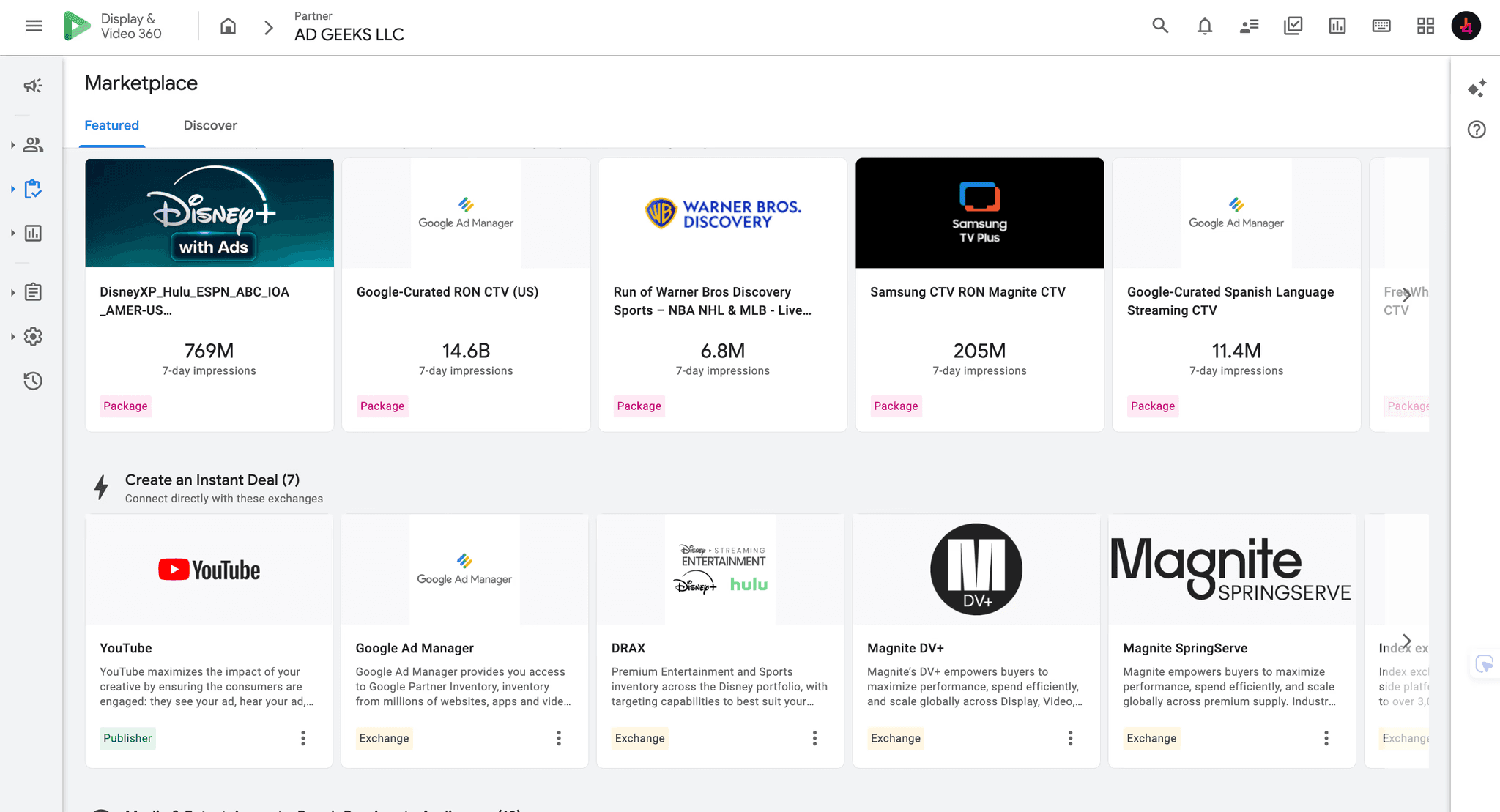
Google DV360 | Partner, enterprise, managed or hybrid | Documented at Partner level, included in billable cost; can be tiered. Google - Fees and billable cost | No universal public minimum; a Partner may set its own commercial threshold - confirm whose rule it is | Partner-operated, hybrid or managed, depending on access route | Oct 21, 2026 |
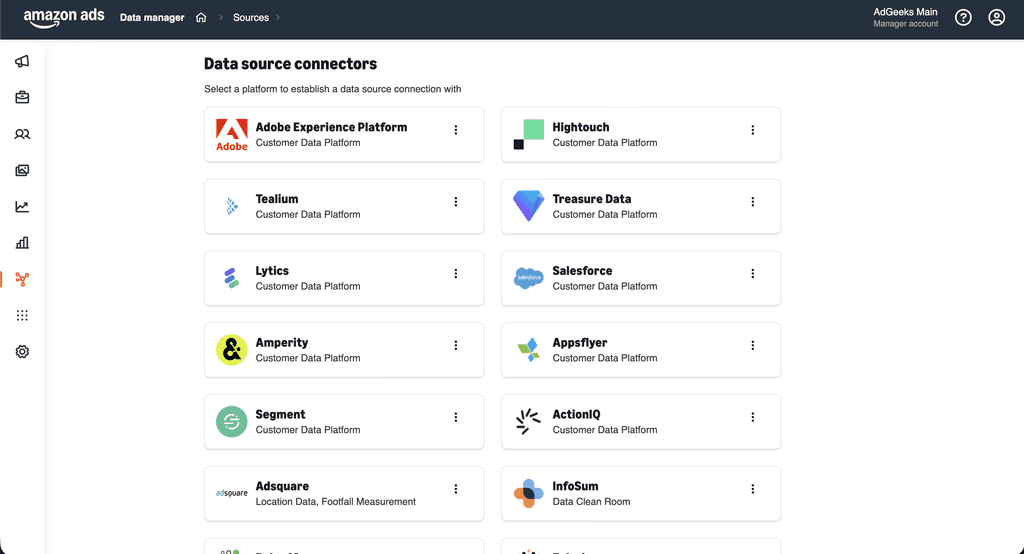
Amazon DSP | Self-service or managed service | Platform fee not separately published; managed service bundles execution | Managed service typically $50,000+, varies by country; self-service is a separate route. Amazon Ads | Self-service (advertiser-operated) or managed (Amazon-operated) | Oct 21, 2026 |
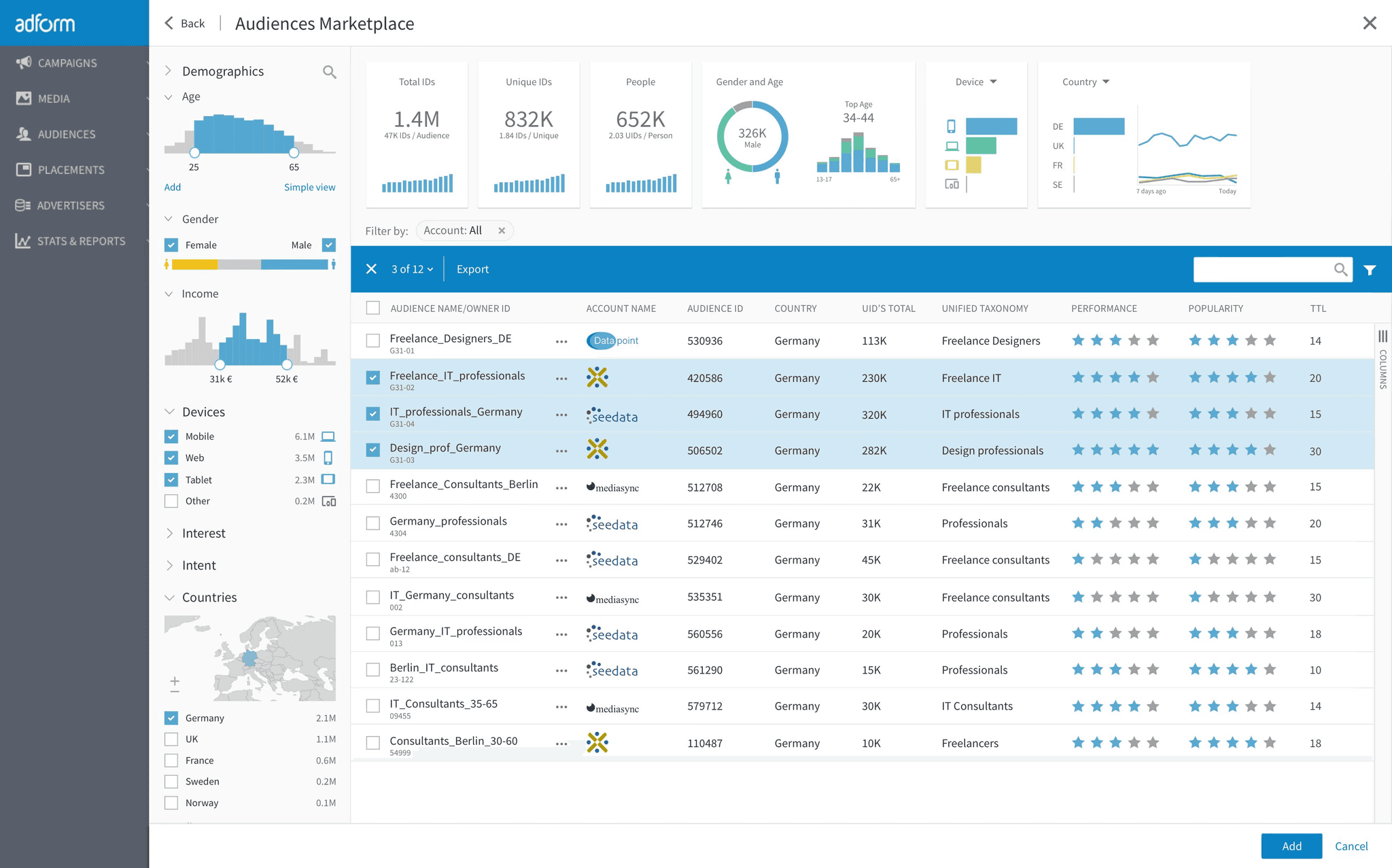
Adform | Direct or provider-arranged | No standard public rate card. Adform | Request a written quote separating media, technology, service and data costs | Varies by provider; typically managed or hybrid in Europe | Oct 21, 2026 |
StackAdapt | Self-service, managed or hybrid | "No hidden tech fees" per vendor; no universal minimum published. StackAdapt | Confirm recommended investment for market, channels and support tier | Self-service, managed or hybrid by package | Oct 21, 2026 |
Choozle | Self-service or managed service | Platform fee bundled into the published thresholds. Choozle | Self-service: $15,000 media over 90 days, no contract commitment. Managed: $10,000/month | Advertiser-operated (self-service) or Choozle-operated (managed) | Oct 21, 2026 |
These figures are a comparison starting point, not quotes. Country, currency, inventory, media volume, data usage, measurement, service scope and contract length all change the final economics.
What does "minimum spend" actually mean?
"Minimum spend" can describe six different thresholds. A proposal should name the exact type before any number is compared:
Platform minimum - the amount required to open or retain direct DSP access.
Provider minimum - the threshold an agency, reseller or partner sets commercially; not the platform owner's universal rule.
Managed-service minimum - the media investment required before a platform or provider will operate the campaign. Amazon's published $50,000 figure is specifically attached to managed service.
Campaign minimum - the smallest single campaign budget a provider will launch.
Inventory or deal minimum - a publisher, PMP or programmatic-guaranteed deal can carry its own floor.
Measurement minimum - brand-lift, sales-lift or incrementality studies often need a minimum spend or impression volume to produce a usable read.
A $20,000 provider minimum does not prove the underlying DSP requires every advertiser to spend $20,000.
The seven cost layers to compare
Minimum spend is not total cost. Ask every shortlisted provider to separate:
Cost layer | What it covers | Question to ask |
|---|---|---|
Media spend | Money used to buy impressions | How much of the budget reaches inventory? |
DSP technology fee | Use of the buying platform | Percentage-based, CPM-based, fixed or tiered? |
Access or partner cost | Fees added by an intermediary | Which charges come from the platform and which from the provider? |
Campaign management | Setup, trading, optimization, reporting | Fixed, percentage-based or included? |
Audience and data | Paid third-party segments | Which audiences add a CPM or percentage surcharge? |
Verification and measurement | Brand safety, fraud, viewability, lift, attribution | Which tools are included vs. optional? |
Creative and ad serving | Adaptation, production, dynamic creative, serving | Billed separately or bundled? |
Google's own DV360 documentation shows why this matters: billable cost is media cost plus invoiced partner costs, tracked at partner, insertion-order or line-item level. Google - Fees and billable cost
Pricing models: percentage of spend vs flat fee vs CPM
Model | How it works | Fits when | Main risk |
|---|---|---|---|
Percentage of media spend | Fee scales with spend | Variable budgets, costs that should track delivery | Provider earns more as spend rises, even if workload does not |
Fixed monthly fee | Set platform/management amount | Stable, high-enough volume to absorb the fixed cost | Effective rate gets expensive at low spend |
CPM-based fee | Charged per 1,000 impressions served | Impression volume is more forecastable than total spend | Fees can rise even when media CPMs fall |
Tiered rate | Rate changes at spend thresholds | Larger advertisers negotiating volume | Poorly defined tiers break forecasting |
Blended / all-in rate | Several costs combined into one number | Buyers who want billing simplicity | Harder to audit what reaches media |
Effective fee rate = total non-media fees ÷ media spend. A $3,000 monthly fee is 15% of a $20,000 budget but only 6% of a $50,000 budget - always normalize before comparing headline percentages.
Google DV360: fees, markup and management model
Google documents the DV360 fee within a Partner configuration and includes it in billable cost, which can carry a tiered structure. Google - Fees and billable cost The commercial offer an advertiser receives can therefore include media cost, the DV360 fee, invoiced partner costs, the access provider's own management fee, third-party data/verification/measurement costs, and country-specific taxes.
Google does not publish one universal advertiser minimum. Before accepting any "DV360 minimum" claim, ask: is this Google's rule, the Partner's commercial requirement, or the managed-service threshold - and does it apply to media or total invoice? See How to Get DV360 Access.
Amazon DSP: fees, markup and management model
Amazon offers self-service (advertiser-operated) and managed service (Amazon-operated, typically $50,000+ and varying by country). Amazon Ads The $50,000 figure is attached specifically to managed service - it is not a universal requirement for self-service or third-party access arrangements.
See Amazon DSP access and services and Prime Video advertising through Amazon DSP.
Adform: fees, markup and management model
Adform's public site shows no standard DSP rate card or universal minimum. Adform Request a written breakdown of minimum commitments, service fees, technology fees, included vs. additional data costs, measurement, campaign management, billing terms and exit conditions. Read Adform Pricing Explained before comparing proposals.
StackAdapt and Choozle: fees and minimums
StackAdapt publishes self-service, managed and hybrid models and states "no hidden tech fees," but does not display one universal minimum. StackAdapt Confirm the recommended media level for your market and channels directly.
Choozle publishes clear thresholds: self-service minimum of $15,000 media over 90 days with no contract commitment, and $10,000/month for managed service. Choozle The advertiser plans and optimizes self-service campaigns; Choozle operates managed campaigns.
How much budget do you need?
Planning guidance from AdGeeks, not a vendor minimum or performance promise. Evaluate against complexity: markets × audiences × channels × creatives × devices × time.
Budget band | What it realistically supports |
|---|---|
Under $5,000 | One geography, one primary audience, 1-2 formats. A DSP may accept it technically; it still may lack scale to learn. |
$5,000-$10,000 | A focused self-service program: controlled audience tests, display + video, retargeting or a narrow CTV test. |
$10,000-$25,000 | Multiple audiences, selected channels, several markets, PMP tests, or a managed/partner-supported model. |
$25,000-$50,000 | Broader CTV/video, deliberate segmentation, creative testing, dedicated management. |
$50,000+ | Multi-market, multi-channel plans. Amazon's published managed-service threshold begins here - but higher spend alone does not justify an enterprise DSP; inventory, data and control needs must. |
Self-service vs. partner access vs. managed service
Operating model | Best for | Main advantage | Cost/risk to include |
|---|---|---|---|
Self-service | Experienced in-house traders/agencies | Direct control, lower external management cost | Staffing, training, setup, optimization, QA, troubleshooting |
Partner access | Teams needing an enterprise DSP without a direct contract | Broader platform choice, operational support | Provider fees, account-control terms, provider-set minimums |
Managed service | Teams without trading resources | Execution and optimization provided | Management fee, higher minimum, less day-to-day control |
Hybrid | Teams building internal capability | Control with support where needed | Shared ownership must be defined clearly |
A badly operated $10,000 self-service campaign can waste more than a well-run $15,000 managed one. Compare the full internal cost of people, training and risk against the external management fee.
Hidden costs that matter most at lower budgets
At lower spend, fixed and percentage fees consume a larger share of total investment. Confirm: audience-data fees, verification/brand-safety tools, ad serving, measurement/attribution, creative resizing or CTV specs, premium deal floors, reporting/API access, internal labor, managed-service/partner fees, and taxes or currency conversion. Ask every provider for both media spend and all-in billable cost.
Which DSP fits each use case?
Choose DV360 when YouTube is part of a wider plan, premium video/CTV/private deals matter, or enterprise governance justifies the complexity.
Choose Amazon DSP when Amazon commerce signals, owned inventory or Prime Video matter, and the managed-service threshold is viable.
Choose Adform when evaluating enterprise omnichannel buying, especially in Europe.
Choose StackAdapt when you want self-service with a path to managed support and a multi-channel independent DSP.
Choose Choozle when the published self-service or managed thresholds fit the plan and transparent entry terms matter most.
For a capability-led comparison, read DV360 vs Independent DSPs.
How to compare DSP proposals fairly
Give every provider the same brief (markets, currency, monthly budget, campaign duration, objective, channels/CTV needs, audience and first-party-data requirements, inventory/deal needs, creative formats, reporting needs, preferred service model), then require the same pricing fields:
Required field | Requested answer |
|---|---|
Media spend | Currency amount per month/campaign |
DSP technology fee | Percentage, CPM, fixed or tiered |
Partner/access fee | Percentage or fixed |
Management fee | Percentage or fixed |
Audience data | Included or additional |
Verification | Included or additional |
Measurement | Included or additional |
Creative/ad serving | Included or additional |
Minimum commitment | Monthly, quarterly, annual or none |
Deal minimums | Publisher-specific commitments |
Billing | Prepaid, invoice and payment terms |
Account ownership | Access during and after the contract |
Exit terms | Notice, data export, campaign-history access |
Only compare percentages after the included services are normalized.
What can you negotiate?
Fee tiers, minimum-spend period (quarterly vs. monthly), service scope (what the management fee actually includes), data/verification/measurement inclusions, support SLAs, billing/payment terms, and account ownership/portability are all commonly negotiable with enough volume, commitment length or market scope. Open-auction media prices, publisher deal floors, taxes and some third-party charges usually sit outside the provider's control.
Red flags in DSP pricing proposals
A "universal industry-standard fee" with no definition of what it covers.
A minimum with no stated basis (media vs. total billings; monthly vs. annual vs. per campaign).
A provider minimum presented as the platform owner's rule - especially common with partner-access products like DV360.
Amazon's $50,000 figure presented as universal, when it is specifically the managed-service threshold and varies by country.
"No minimum" presented as "any budget works" - commercial access and campaign viability are different questions.
One blended percentage that hides technology, management, data or markup - ask for each component separately.
No definition of managed-service responsibilities in writing.
Frequently asked questions
How much does a DSP cost?
DSP cost usually combines media spend with some mix of technology, access, management, data, verification, measurement, creative and ad-serving fees. The exact structure depends on platform, contract, country and support model.
Which DSP has the lowest minimum spend?
There is no universal winner. Choozle publishes clear self-service and managed-service thresholds. StackAdapt's current plans page shows no universal minimum. DV360 and Adform require contract- or provider-specific confirmation. Amazon's public $50,000 figure applies to its managed-service option only.
Does DV360 require a $50,000 minimum?
Google does not publish a universal $50,000 advertiser minimum in its DV360 fee documentation. A provider may set its own commercial threshold - confirm whether a quoted number comes from Google, the Partner, or the managed-service agreement.
Does Amazon DSP require $50,000?
Amazon states its managed-service option typically requires $50,000, varying by country. Self-service is a separate, lower-threshold route.
What is Choozle's minimum spend?
$15,000 in media over 90 days for self-service (no contract commitment) and $10,000 per month for managed service, as published on Choozle's site.
Is self-service always cheaper than managed service?
Not necessarily. Self-service reduces external management fees but adds internal staffing, training, operations and QA cost. Compare total operating cost and campaign quality, not only the management line item.
Are DSP fees negotiable?
Often, yes - platform, access and management fees can flex with media volume, contract length, markets and service scope. Media auction prices, publisher deal floors and taxes are usually outside the provider's control.
Is a percentage-of-spend fee better than a flat monthly fee?
It depends on scale and what is included. Percentage pricing suits variable budgets; a flat fee is more efficient at higher, stable spend but disproportionately expensive at lower budgets. Compare the effective fee rate after normalizing what each quote includes.
Editorial sources
All figures above were checked against these sources on October 21, 2026. Platform fees and minimum-spend thresholds change; recheck before using any number in a client-facing quote.