
Quick answer: There is no universal CTV advertising minimum budget. A self-service platform may accept a campaign for USD 500 or allow a small daily budget, while a direct publisher agreement or private marketplace deal may require a much larger commitment. Those are access rules, not proof that the campaign can produce a useful result.
For a mid-market brand, a practical first CTV test often starts with USD 25,000-50,000 in working media for one clear audience, one defined market or market group, 4-6 weeks and a limited creative set. A smaller USD 15,000-25,000 pilot can work when geography and scope are tight. Plans that cover several markets, multiple audiences, creative tests or incrementality measurement often need USD 50,000-100,000 or more.
These are planning bands, not platform requirements or guaranteed results. Build the final budget from the expected CPM, available audience, desired reach, frequency, campaign length, fees, creative cost and measurement threshold.
The platform minimum is not the campaign minimum
The phrase “minimum budget” can describe 3 different numbers. Mixing them together leads to weak plans.
Access minimum: the smallest amount a platform, publisher or seller will accept.
Delivery minimum: the spend required to reach enough of the intended audience at a useful frequency.
Learning minimum: the spend required to compare audiences, creatives or outcomes with enough data to make a decision.
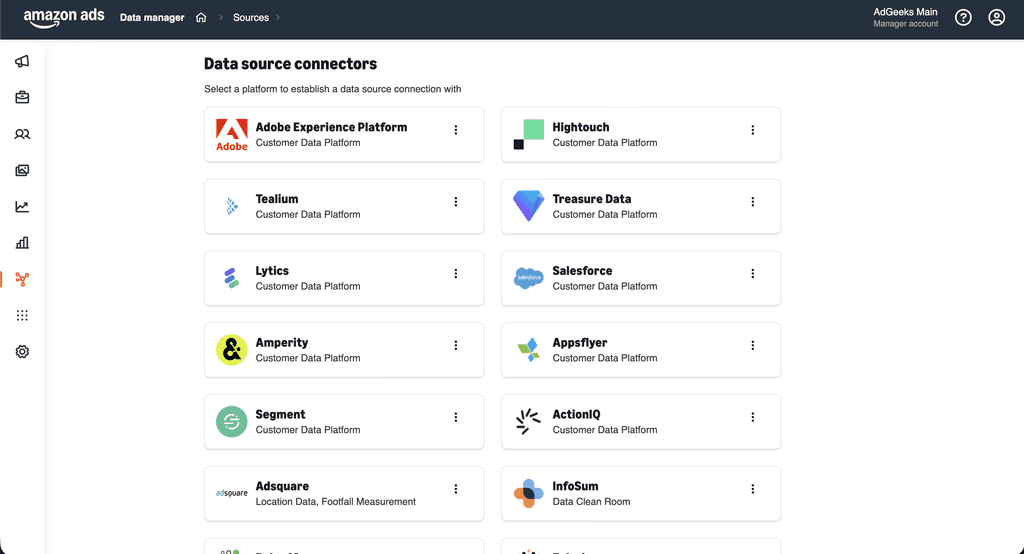
Roku Ads Manager, for example, says a campaign can be published for as little as USD 500. Google Ads lets advertisers control an average daily campaign budget. Other CTV access routes may use seller-specific commitments, private deal floors or managed-service requirements. None of those numbers accounts for your audience size, CPM, test cells or measurement design.
The right question is not “What is the smallest campaign I can launch?” It is “What is the smallest campaign that can answer the business question?”
Practical CTV budget bands for mid-market brands
Working media | Best use | Keep the plan focused on | Main limitation
|
|---|---|---|---|
USD 15,000-25,000 | Controlled pilot | 1 geography, 1 primary audience, 1-2 creatives, 4 weeks | Limited room for splits, premium guarantees or advanced studies |
USD 25,000-50,000 | Practical first test | 1 market group, a clear reach goal, 2-3 creatives, 4-6 weeks | Still requires disciplined audience and inventory choices |
USD 50,000-100,000 | Structured learning plan | Several markets or audiences, creative comparison, broader inventory | More variables make clean conclusions harder without a test plan |
USD 100,000+ | Scaled or national plan | Premium deals, multiple partners, incremental reach or formal lift work | Requires tighter supply, frequency and measurement governance |
Do not treat these bands as rate cards. A local campaign aimed at a broad household audience may deliver efficiently at the low end. A narrow business audience, premium sports inventory, a guaranteed publisher package or a small high-value geography may need a different plan.
Start with the media math
CTV is usually priced on a cost-per-thousand-impressions basis. The first planning equation is simple:
Impressions = media budget ÷ CPM × 1,000
If a plan uses an illustrative USD 30 CPM, the delivery math looks like this:
Media budget | Illustrative CPM | Estimated impressions | Simple reach proxy at frequency 4
|
|---|---|---|---|
USD 15,000 | USD 30 | 500,000 | 125,000 |
USD 25,000 | USD 30 | 833,333 | 208,333 |
USD 50,000 | USD 30 | 1,666,667 | 416,667 |
USD 100,000 | USD 30 | 3,333,333 | 833,333 |
The reach column is only a planning proxy calculated as impressions divided by average frequency. Real reach is not distributed evenly. Household identity, overlap across publishers, auction dynamics and audience eligibility all affect the result.
Use the AdGeeks media budget planner to turn CPM and impression assumptions into a starting budget. Then use the reach and frequency planner to pressure-test delivery before committing spend.
Build the budget from reach and frequency
For awareness, the minimum should be based on the number of qualified households or people the campaign must reach and the average number of exposures needed during the flight.
A practical planning sequence is:
Estimate the eligible audience in the selected geography.
Choose a realistic target reach percentage.
Set a target average frequency for the full flight.
Multiply target reach by frequency to estimate required impressions.
Apply the forecast CPM and add an allowance for auction and inventory changes.
Example: a brand wants to reach 400,000 eligible households at an average frequency of 4. The plan needs about 1.6 million impressions. At an illustrative USD 30 CPM, working media is about USD 48,000 before fees, creative and measurement.
Frequency must be managed across the full supply path. Buying the same household through several publishers or DSPs can create hidden duplication. The CTV frequency-capping guide explains why platform-level caps alone may not control total exposure.
Budget by the question the campaign must answer
Awareness and efficient reach
The minimum is the spend required to reach a meaningful share of the audience without underdelivering or concentrating impressions on a small group. Prioritize forecasted reach, frequency, completion rate and supply quality. Avoid splitting a small budget across too many apps or audiences.
Incremental reach beyond linear TV or YouTube
The plan must be large enough to create measurable reach beyond the existing video mix. That usually requires compatible identity and reporting across channels. If the budget cannot support deduplicated reach, the campaign may report impressions but fail to answer whether CTV added a new audience.
Site visits, leads or sales
Start with the number of outcomes needed to judge performance. Work backward from the expected exposed-audience response rate and the measurement method. A campaign that expects only a handful of conversions cannot support meaningful optimization, even if the media technically delivers.
Creative testing
Every additional test cell divides the budget. A USD 30,000 plan with 3 creatives and 2 audiences creates 6 possible cells before geography or inventory is considered. If each cell cannot receive enough impressions, simplify the test. Sequential testing is often cleaner than launching every variation at once.
Brand lift or incrementality
Study providers may require minimum spend, impression volume, exposed users or control-group size. Get those thresholds before finalizing media. Do not approve a campaign and then discover that the selected study cannot run.
What sits outside working media?
The CTV advertising minimum budget should be stated as working media and all-in investment. Ask whether the quoted CPM is gross or net and what is already included.
Platform and technology fees: DSP, data, verification or serving charges may be included in the CPM or added separately.
Agency or managed-service fees: planning, setup, deal sourcing, optimization and reporting may use a percentage, retainer or fixed project fee.
Creative production: existing TV assets may need new durations, safe-area changes, captions, legal updates or platform-specific versions. Check the CTV ad specifications guide before production.
Measurement: brand lift, attribution, clean-room work or incrementality testing may add a fixed or variable cost.
Contingency: keep room for CPM changes, stronger-performing inventory or an extension when the first learning signal appears.
For example, a USD 60,000 all-in test might reserve USD 45,000 for working media, USD 6,750 for platform, data and campaign operations, USD 3,000 for measurement and USD 5,250 for creative adaptation and contingency. The correct split depends on whether fees are already embedded in the buying route.
How buying method changes the minimum
Buying method | Budget effect | What to verify
|
|---|---|---|
Self-service platform | Low access floor and flexible pacing | Eligible inventory, actual CPM, targeting, measurement and support |
Open auction | No private deal commitment, but delivery and supply can vary | Seller quality, app transparency, fraud controls and frequency |
Private marketplace | May use a price floor or seller expectation rather than a fixed minimum | Deal type, inventory, CPM floor, volume, priority and fees |
Programmatic guaranteed | Reserved volume creates a defined commitment | Impressions, dates, price, cancellation and makegoods |
Direct insertion order | Often suited to larger packages, premium formats or sponsorships | Minimum commitment, production, reporting and measurement rights |
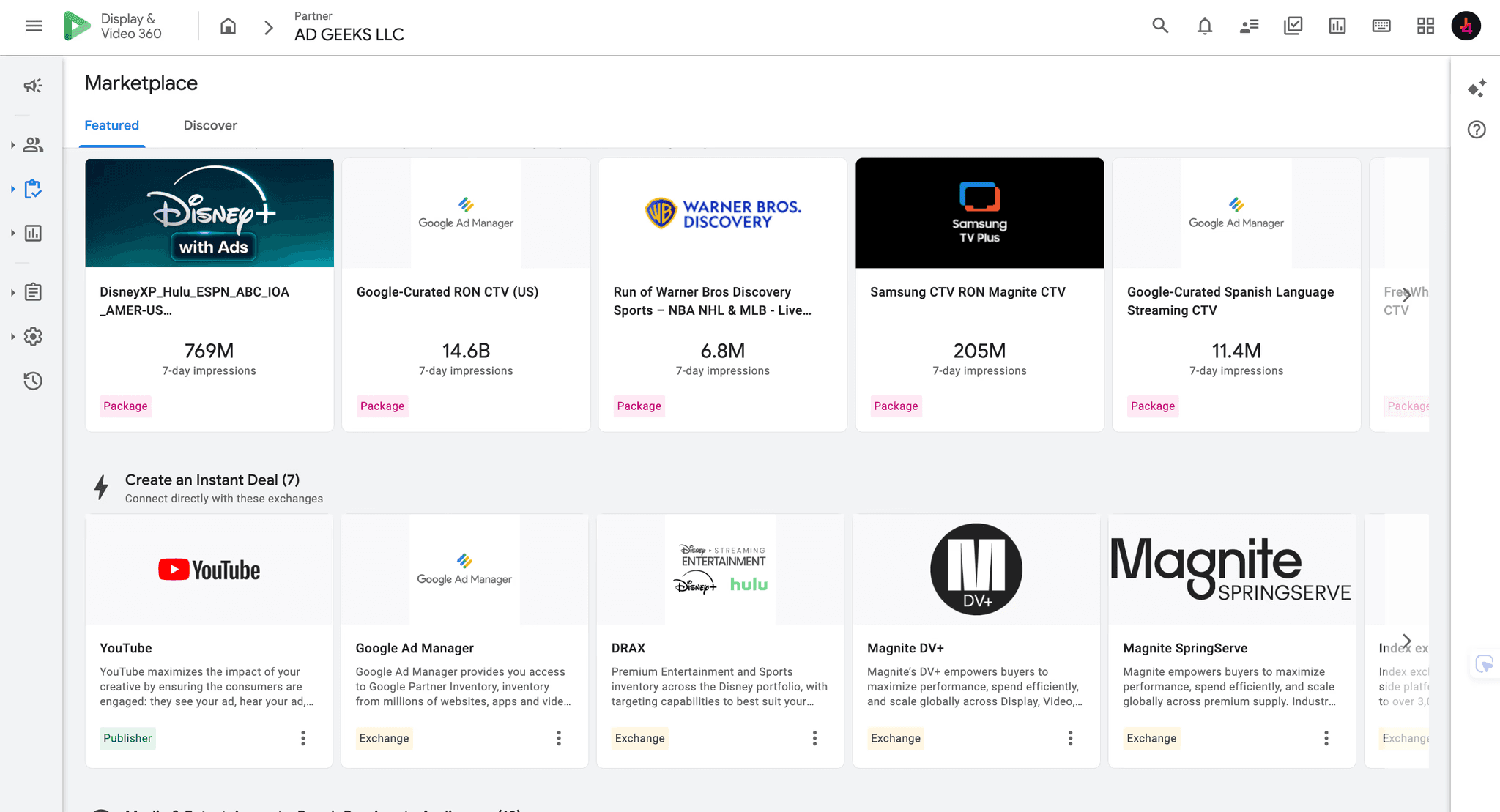
The premium CTV inventory map helps separate platform access from actual publisher and app availability. A low platform minimum does not guarantee access to every premium environment.
When is a CTV budget too small?
A budget is too small when it forces the campaign to answer more questions than its delivery can support. Warning signs include:
The forecast reaches only a small share of the eligible audience.
The flight is too long for the daily budget, so delivery becomes intermittent.
The plan divides spend across too many markets, audiences, publishers or creatives.
Expected conversions are too few to evaluate or optimize.
Measurement costs consume most of the available investment.
Premium inventory requirements leave too little scale.
The forecast relies on an unrealistically low CPM.
When the budget is constrained, reduce scope before reducing quality. Choose fewer markets, one primary audience, fewer creatives and one clear success metric. A focused pilot produces better learning than a thin national campaign.
A practical 6-step planning process
Define the decision. State what the campaign must prove: qualified reach, incremental reach, creative response, site activity or sales impact.
Set the audience and market. Confirm the eligible size after geography, demographics, interests and exclusions.
Forecast delivery. Compare CPM, impressions, reach and frequency across realistic inventory routes.
Limit test cells. Give each audience and creative enough budget to produce a usable signal.
Price the full plan. Add platform, data, service, creative, verification, measurement and contingency costs.
Agree on the reporting method. Define attribution windows, reach definitions, deduplication and the final decision rule before launch.
The IAB Standardized Measurement Guide for CTV highlights the difficulty created by fragmented standards and signal quality. Budget should therefore support both delivery and a measurement method the team can explain.
Where AdGeeks fits
AdGeeks builds CTV budgets from the outcome backward. We compare available buying routes, forecast reach and frequency, check inventory quality, limit unnecessary test cells and separate working media from fees. The recommendation can be a focused pilot, a larger multi-market plan or a different channel mix when CTV cannot answer the brief efficiently.
We also connect the budget to creative QA and reporting. The goal is not to spend the platform minimum. It is to fund the smallest credible plan that can deliver, measure and support a decision.
Frequently asked questions
What is the minimum budget for CTV advertising?
There is no universal minimum. Some self-service platforms accept small campaigns, while direct and deal-based routes may require larger commitments. For a mid-market brand, USD 25,000-50,000 in working media is often a practical starting range for one focused 4-6 week test.
Can I test CTV with USD 5,000?
Possibly, but the test must be very narrow. A USD 5,000 campaign may confirm workflow, creative approval or basic delivery. It is less likely to support broad reach, multiple test cells or a reliable outcome study. Treat it as an operational pilot unless the eligible market is small.
Does a higher CPM always mean worse value?
No. A higher CPM may reflect premium content, stronger audience data, a guaranteed deal, lower duplication or better reporting. Compare the cost of qualified reach and business outcomes, not CPM alone.
How long should a first CTV campaign run?
A 4-6 week flight is often long enough to observe delivery and early outcomes without spreading the daily budget too thinly. Seasonality, audience size, conversion delay and study design can justify a different period.
Should the budget include creative and measurement?
Yes. Present working media and all-in cost separately. Include platform and data fees, campaign operations, creative adaptation, verification, measurement and contingency when they are not already embedded in the quoted media cost.
How much budget should each creative receive?
There is no fixed percentage. Start from the impressions or outcomes each creative needs to produce a useful comparison. If the total budget cannot fund every cell, reduce the number of creatives or test them in sequence.